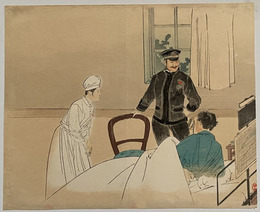
GHqが把握していた旧日本軍の病院。医療インフラ
.jpg)
敗戦後の日本へ進駐するにあたり、1945年8月15日以前に、アメリカ軍作成資料。
その徹底した調査能力に驚かされる。 <紹介者注>
********************
SECTION 1 PUBLIC HEALTH AND WELFARE CONTENTS
General Public Welfare Administration of Hospitals Veterinary Affairs / Dental Affairs Nursing Affairs Medical Supply Legal Preventive Medicine / / , GENERAL Paragraph i 4 13 15 20 24 28 32 36 1. During the war years the Japanese desire to promote only those activities that contributed to military operations resulted in attaching secondary Importance to public health and welfare affairs. . Manufacture of supplies essential for the maintenance of national health and welfare was curtailed and even scarce products were requisitioned for UBe by the military. Standard* of training for professional groups declined, and the downward tendency was further accelerated as large groups of professional operatives were drawn into the Army. The Civil Service personnel system, which placed capable, trained men under the direction of individuals not professionally trained, became all the more inefficient. Reporting of all public health and public welfare statistics which had never been adequate was neglected and in some cases no reports were made. The presence of large groups of Chinese and Koreans needing assistance complicated the relief problem. Destruction by bombing caused an additional weakening of the already neglected public util ity services. Hospitals lacked supplies and a general slackness of upkeep was evident. Though the food supply was adequate and the people were in a good state of nutrition blapk markets were inter fering with the distribution of food. No epidemics were reported. Actions Taken 2. Medical and dental supplies which had been stockpiled by the Japanese Army and Navy are being returned for civilian use and a study has been made of the regulations for manufacturing sera and vaccines. Narcotics control measures have been implemented. Directives requiring registration of all cases of communi cable disease and reporting of the use of preventive measures have been issued. Weekly hospital bed status reports are being received and used as indications of requirements. Measures for controlling animal diseases hare been put in effect and monthly reports of such diseases are being received. Meats and dairy products are being inspected. 3. The Japanese Government was directed to furnish accurate statistics on the status of the several government managed social insurance systems. Civil Service regulations which favor general administrative personnel in technical positions are receiving atten tion. Action has begun on the raising of training standards of all professional and welfare personnel. The Japanese Government will report specifically on all phases of public health and welfare activity. PUBLIC WELFARE 4. Public Welfare Administration in Japan during the war was influenced by the two main pressures of rapid industrialization and urbanization in the four main islands and the dominance of military alms over all social welfare considerations. Industrialization and expansion of urban population created additional social problems and intensified the emotional strain of war. Some expansion of social insurance, particularly health protection, and the development of measures to keep labor in a productive mood were required. Pressure of militarism brought greater emphasis on such wartime protective measures for individuals as compensation for bomb damage, free transportation from devastated areas, and the "cultural development" of Koreans in Japan. It also resulted in a complete cessation of social work training and an attempt to elim inate other Western influences in public welfare administration. The wartime pressures coupled with the traditional pater nalism of Japanese thought and its shallow attack upon fundamental problems resulted in an almost complete breakdown of both public and private social work administration. The closing months of the war added confusion to an already disorganized administrative pattern. 5. The Ministry of Health and Welfare is nominally the agency of the Japanese Government charged with the operation and super vision of welfare activities. But the Home Ministry through its appointment and control of prefectural governors and the Finance Ministry through budgetary controls have actual supervision of all activities at lower governmental echelons. Prefectural governors report directly to the Home Ministry. Although technical liaison is maintained between the prefec tural welfare staffs and the ministry, the latter does not influence local administration. It does not maintain a field supervisory service, budget or auditing controls, a system for obtaining cur rent statistics on expenditures or caseloads (except a fiscal year report), standards for professional employment or requirements re garding performance. Belief 6. During the war severed public and private agencies were established for meeting welfare and relief needs. An attempt has been made to sift through the meager materials presented to date in order to determine the function of each agency. In addition the Ministry of Health and Welfare has been directed to present data regarding its organization, functions, current statistics, estimated future case load, areas of greatest need and information of similar nature. Information ae to the number of persons in need of or actually receiving assistance was incomplete. Reports received estimate 83,502 individuals were actually receiving relief. No information was available as to the quantities of supplies and facilities available for their care. 7. Factors of particular significance to the welfare problem are the lack of essential food, clothing, housing and fuel. Relief measures which have been taken are under the sponsorship of the Home Ministry rather than the public welfare administration. Social Insurance 8* The Social Insurance Bureau of the Ministry of Health and Welfare is responsible for supervision of five insurance programs in Japan: Sickness Insurance, National Sickness Insurance, Work Liability Insurance for Accidents, Seamen's Insurance, and Pensions Insurance. Local administration of these insurance systems is conducted by the prefecture! insurance institutions and private insurance associations recognized by the ministry. The Social Insurance Bureau has submitted preliminary in formation summarizing its activities and outlining the several types of insurance coverage. The Bureau reports 9,500,000 persons insured by Sickness Insurance in December 1944, 41,500,000 persons by Na tional Sickness Insurance in September 1945, 270,000 workers by Workers Liability Insurance in December 1944, 160,000 seamen by Sea men's Insurance in April 1945 and 8,500,000 persons by Pensions In surance in November 1944. The Bureau has been directed to submit current statistics on coverage, contributions, benefits paid, reserve funds and related subjects. firlyaS-8 Ageftgleg 9. A Washington representative of the American Red Cross has been in Tokyo for conversations regarding possible activities of ARC in the Japanese civilian program. The representative has also sur veyed the situation in Korea. No proposal has yet been received for action by this Headquarters though the possibility has been explored that skilled ARC social work technicians be assigned to lower echelon Army units in advisory capacities. Japanese Bed Oro.. 10. The reorganization of the Japanese Red Cross to eliminate its military status and dependence upon the Japanese Army and Navy has been the subject of discussion between this Headquarters and JRO leaders. IXiring the war the activities of that agency were al most wholly confined to its medical function within the Army and Navy. Its National Relief Department was supervised by the Japa nese Army Chief Surgeon. Although approximately 10 hospitals were maintained for civilian care, major emphasis was directed toward the military pro gram. No civilian relief has been undertaken nor is there any well organised relief staff comparable to the American Red Cross disaster relief organization for post-war use. Under disaster conditions the fact that the local Red Cross organization is under the direction of the prefectural governors tends to obsqure any civilian aspect of its program. The close control of the organization by government per sonnel requires revision. It is proposed to encourage speedy charter changes and reactivation of the agency's peacetime functions. Repatriation of Koreans 11. At the time of the activation of SCAP the repatriation of Koreans from Japan had been in progress for approximately one month. Japanese shipping used in returning Japanese nationals from Fusan to the Shimonoseki area is utilized on the return trip to transport Koreans from Japan. It i8 estimated by the Japanese Government that on 15 August 1945, there were about 2,000,000 Koreans in Japan, includ ing 350,000 contract (requisitioned) laborers, and that through 31 October approximately 150,000 had been repatriated to Fusan. Col lection of data on the location and condition of Koreans in Japan is underway and the Japanese plan of repatriation and policy for their minimum care and protection are under surveillance. Care of Foreign Nationals 12. Nationals of other countries who were resident in Japan at the time of occupation included approximately 30,000 Forn»ean Chinese, 30,000 Chinese and 6,000 others. Arrangements were made for the International Red Cross to distribute excess POW supplies (dropped by air prior to occupation) to United Nations nationals and certain neutrals in need of assistance. Monetary relief to foreign nationals has not been re quired but it has been found necessary to supplement their diet to bring it above the normal Japanese standard and to prevent malnu trition. Repatriation of the Chinese groups has been started by the Japanese Government. Most Western nationals desire to remain in Japan. ADMINISTRATION OF HOSPITALS Japanese Army and Navy Hospitals 13. According to reports received from the Japanese Army 78,000 sick and wounded veterans were being treated in 268 hospitals in Japan and nine hospitals in Korea on 15 August 1945. Of these, eight hospitals were destroyed in whole or in part by the bombing. Most of these have subsequently been moved to inns, schools or other civil buildings. There were also approximately 68 field and four clearing hospitals, which are gradually being demobilized. The Ministry of the Japanese Navy reported 58 hospitals having a total capacity of 30,900 beds. Three hospitals having a capacity of 700 beds were 70 to 80 percent destroyed by fire. Japanese Civilian Hospitals 14. Incomplete reports from the Japanese Government of civil ian hospital facilities show that approximately 25 percent of hos pitals and 15 percent of available hospital beds were destroyed as a result of Allied air raids. The Ministry of Health and Welfare on 15 September 1945 reported 1,025 hospitals totally destroyed and 58 hospitals partially destroyed by bombing in 46 prefectures. The 1,083 destroyed and damaged hospitals had a total bed capacity of 53,007. Data were not available for those hospitals having 10 beds or less. The ministry reported 39,269 physicians, 17,438 dentists and 96,846 nurses available in Japan in September 1945 and estimated that there were an additional 20,000 physicians, 4,000 dentists and 35,000 nurses to be demobilized. Hospitals in Japan, including Army and Navy facilities now available for civilian use, total approximately 3,335 with 356,143 beds. On 15 September 1945 an estimated 248,126 Army, Navy and civilian patients were hospitalised. Hospitals in Japan during September 1945 were operating at approximately two-thirds of total capacity. The Japanese hos pital capacity is adequate and their professional personnel is ample at present. Weekly hospital strength reports show little change in the number of persons hospitalized. VETERINARY AFFAIRS 15. A survey of animal disease control and meat and dairy in spection in Japan, conducted immediately after surrender, revealed the fact that the war had curtailed such activities almost to the point where they were nearly non-existent in many parts of the country. There are four government veterinary laboratories where sera, vaccines and biologicals were manufactured for all types of animals. Governmental Organization 16. Veterinary affairs in Japan are administered by two minis tries. The Ministry of Agriculture and Forestry through the Animal Husbandry Section administers animal disease control, port quaran tine and licensing of veterinarians and through the Veterinary Labor atory Section has administrative control of experimentation, manu facture of biologicals and diagnosis. The Ministry of Health and Welfare contains the Preventive Medicine Division. The Veterinary Hygiene Section of this Division is responsible for meat and dairy inspection. Animal Industry 17. The Ministry of Agriculture and Forestry reports the num ber of animals (1944 census) to the nearest thousand: Horses Cattle Swine Sheep Goats Babbits Poultry Animal Disease Control 1,191,000 2,403,000 310,000 181,000 252,000 3,227,000 22,879,000 18. The Japanese Government has been directed to establish measures for the control of animal diseases; preserve all statisti cal records on animal diseases; and submit sox Immediate report of each initial case of anthrax, black leg, and foot and mouth disease. It will submit a monthly statistical report of all animal diseases by prefecture; an annual report on the results of examination for bovine tuberculosis; and an annual report on the preparation and distribution of veterinary sera, vaccines and biologicals. The Ministry of Agriculture and Forestry reports communi cable diseases for the period of 1 January to 31 October 1945 as follows: Disease Blackleg Anthrax Texas Fever Swine Cholera Swine Erysipelas Swine Plague Scabies Bovine Inf. Abortion Fowl Pest White Diarrhea, chicks Outbreaks 3 11 3 9 3 9 2 17 1 19 Cases 5 25 61 519 25 352 9 937 685 13,109 Tuberculosis eradication in dairy cattle showed 3 percent affected in 1942, date of last report. Meat and Dairy Inspection 19. The Japanese Government has been directed to inaugurate or reestablish measures for the inspection of meat, meat food or dairy products; preserve all statistical records on meat, meat food or dairy inspection; and submit a monthly milk and meat inspection re port by prefecture. The Ministry of Health and Welfare reports as follows (1941 figures): Slaughter Houses Cattle slaughtered Calves slaughtered Sheep slaughtered Goats slaughtered Swine slaughtered Horses slaughtered Humber cattle condemned Ante Mortem Post Mortem Total carcasses Partial carcass Viscera only Humber swine condemned Ante Mortem Post Mortem Total carcasses Partial carcass Viscera only Humber horses condemned Ante Mortem Post Mortem Total carcasses Partial carcass Viscera only 712 382,340 35,817 5,317 12,035 603,180 36,415 51 147 4,702 73,667 127 249 3,274 203,673 42 52 2,550 4,720 Statistics art 'being brought up to date ae the disrupted veterinary service ie reeetabliehed in the rarioue prefecture*• At present animal slaughter is about 10 percent of normal because animals are not available. The quality and condition of slaughtered animale are comparatively low. Meat inspection methods in general parallel those in the United States with the exception of sanitary requirements. Veterinary inspectors appear to be efficient and in terested in their jobs but their methods leave much to be desired. Dairy production is almost at a standstill except in Hokkaido. Sanitation in all establishments visited vac found to be substandard. Pasteurization of milk is hampered by faulty tempera ture control devices. Many establishments contain modern dairy equipment not in use because of shortages of personnel, power, spare parts or milk supply. The 1941 reports on milk consumption indicate that approximately 2,840,000 liters of pasteurized and 242,890,000 liters of raw milk were consumed. The normal routine functioning of the two ministries ad ministering the veterinary service in Japan has been interfered with by the war to such an extent that the reestablishment of pre war standards is going to be slow and difficult. DENTAL AFFAIRS 20. All phases of dentistry in Japan were impaired during the war. Dental hygiene programs were curtailed, practitioners were burned out, manufacturing was devastated and dental education handi capped. Becords were incomplete and the general dental health of the people was on a rapid decline. Dental educators and the Educa tion Ministry have agreed on a plan for raising the standards of dental education. Dental Administration 21. Industrial dental hygiene is controlled by the Sanitary Bureau of the Ministry of Public Health and Welfare. This service was impaired during the war but plans are under way for its re juvenation. Dental licensure comes under this bureau but examinations are conducted only for foreigners and self-educated applicants. Graduates of recognized schools are permitted to practice without examination. Dental health insurance is incorporated in the health insurance programs which are controlled by the Insurance Bureau. School dental hygiene is under the jurisdiction of the Department of Education which also controls the dental colleges. The Departments of Army and Navy until two years ago pro vided dental care by attaching civilian dentists to military organ* lzations. Prom then until surrender service was rendered by a corps of approximately 400 dentists plus attached civilians. Dental Sunniles and Equipment 22. Manufacture of supplies and equipment is estimated to be at 50 percent of the required capacity, with normal capacity ex pected within a year. Supplies are rationed and prices controlled through the Dental Materials Control Company whose president is appointed by the Ministry of Public Health and Welfare. Sale8 from October 1942 to March 1943 ¥ 3,627,319 Sales from October 1944 to March 1945 Proposed production for 1946 1,854,927 34,QQ0,000 Accurate figures for dental health are difficult to ob tain but it is safe to say that 75 percent of the pre-adolescent children are dental cripples. Malnutrition, low flourine content of the water, a disrupted dental service and high prices are con tributing factors. Practitioner* 23. There are approximately 23,000 dentietB in Japan. About, 3,600 were in the Army as soldiers and an additional 400 in a pro fessional status. Of the nearly 7,000 displaced from the larger cities by the air raids an estimated 30 percent can be rehabilitated in the near future. Most dentistB practice in their own homes under adverse conditions. They believe it is economically unsound to practice in large office buildings. Some traveling dentists are giving service to rural areas where evacuees have augumented the population. NUBSING ATTAINS 24. Nursing had reached its lowest point about the time of the termination of the war. Before the war there had been a trend toward standardization of training and practice but during war years standards had gradually been lowered by reducing the age require ments for entrance to training schools, shortening courses from two years to one and absorbing approximately 34,000 nurses into the Army and Navy. Standards of education, registration and organization varied greatly. Nursing Education 25. In spite of specific regulations, nursing education was found to be far below the standard. Nurses with no practical ex perience in one or two of the major services of medicine or surgery were able to get licensee. Public health or clinical nurses may take the examination for midwife without specific training for it. Since Naccredited schools” do not require a prefectural examination a nurse may practice midwifery simply by making an application for a license. Licenses for medical personnel in each of the prefectures are issued by a board composed of lawyers, officials of cities, politicians and a few doctors. There are no nursing representatives on the boards. At the present time there are approximately 166,300 grad uates of the 605 training schools. Of these graduates 93,270 are classified as clinical nurses, 13,070 are in public health and ap proximately 60,000 are midwives. The 13,071 public health graduate nurses are employed as follows: official work 536; health centers 4,423; school nurses 1,036; industries 1,098; health insurance 5,907; and miscellaneous 71. Nurses in training number 39,727 and are classified as: clinical 19,011; public health 7,745; midwives 3,695; and Bed Cross hospital students 8,376. Nursing Associations 26. Japanese nurses have no control over their training, licen sing or practice. The Nurses Association representatives, Public Health Association members and prefectural heads of nurses are all men. Pull power is placed in the hands of the presidents and first vice-presidents of boards, composed of lawyers, politicians and "health officers” of the lower level. Midwifery 27. The standards of the midwifery program always low have ■been reduced even further during the war. After six months of training a girl may take a prefectural examination and if she is successful she receives a license on payment of * 0.50. She prac tices without supervision or inspection. MEDICAL SUPPLY 28. During September and October extensive studies were made concerning the requirements of medical, dental and veterinary sup plies for Japan and Korea with a view to determining whether stocks and manufacturing facilities were adequate. Surveys have been made of medical supply manufacturing installations in the Tokyo area and Japanese officials have submit ted reports and statistics showing stocks on hand, previous con sumption and amounts required to maintain normal standards of medical care and treatment. Supply Operation 29. Under the initial supply plan a reserve of medical and sanitary supplies was set up for shipment to Japan. This was to be used to supplement Japanese stocks if necessary. Shipment of that reserve was cancelled when a policy was established that no civil ian relief supplies would be imported. Further study of the subject at the time indicated the possibility of a need for importation of certain medical supplies as a protection to the health of the Occu pation Forces and to alleviate acute suffering and distress among the civilian population. Accordingly limited requirements have been reestablished. Typhus control equipment and supplies have been shipped and additional quantities have been requisitioned for shipment to Japan for use in the event of emergency. Becommendations have been submitted for establishment in U. S. depots of a reserve of basic medical, sanitary, dental and veterinary civilian relief supplies which would be available for immediate shipment upon call. Upon movement of the Occupation Forces to Japan the SIXTH and EIGHTH Armies, XXIV Corps and the V Amphibious Corps were each issued limited quantities of medical and sanitary supplies. Prac tically none of these supplies have been used. Instructions prohibit the issue of any such supplies for civilian relief without authority of this Headquarters. Two shipments of civilian relief supplies consisting of approximately 4,000 boxes of medical supplies have been received by the EIGHTH Army and are now'stored in Yokohama. These shipments were originally destined for the Philippines but were diverted en route due to the fact that the vessels contained considerable amounts of military supplies urgently required by the Occupation Forces. On 6 September approximately 12 tons of medical supplies were dispatched to the International Bed Cross Delegate at Hiroshima for use in the relief of Japanese persons injured in thatarea. Distribution of the supplies was under direction of the International Red Cross and that agency submitted a detailed report to this Head quarters showing disposition made of individual items. Under date of 24 September the Japanese Government was di rected to initiate necessary action to inventory, receive and dis tribute for civilian use stocks of medical supplies held by the Japanese Armed Forces. The Home Ministry has been designated to perform this mis sion for all classes of material including medical. The procedure as set up requires the responsible Japanese officials to submit an inventory to Occupation Force Commanders who are authorized to ac cept the inventory, if considered accurate. A physical transfer is then made to the Home Ministry. The distribution for civilian use represents a consider able task. Locations of all sources of supply are not known and records are incomplete in that respect. Distribution has to be determined according to needs in the various prefectures and ac curate figures of need do not appear to be available. Manufacture 30. The manufacture of medical, dental and veterinary sup plies 1b practically at a standstill. All plants visited in the Tokyo-Yokohama area have suffered extensive damage and no compre hensive plan of rehabilitation has been inaugurated. Extensive re ports have been received covering requirements of medical supplies but it has been very difficult to determine just what is necessary to reestablish the industry and the extent of manufacturing required to maintain normal standards of medical care and treatment. The Japanese had a very complex system of control over both production and distribution but the Army and Navy, which were the largest consumers during the war, were not required to secure materials through the established control agencies. Narcotics 31. A directive to the Japanese Government of 12 October 1945 prohibited the planting, cultivation or growth of narcotic seeds or plants and the exportation of narcotics. Importation also was pro hibited except asr authorized by SCAP. All stocks of crude, semi-processed or smoking opium, crude or semi-processed cocaine, heroin and marijuana have been frozen and the removal, destruction, use or sale thereof or of any books or records are prohibited. All stocks of crude or semi-proces sed narcotics will be transferred to the custody of Occupation Forces. Finished products now in normal channels of distribution except heroin and marijuana will be left in the hands of the Japa nese for medicinal use unless the inventory which is submitted dis closes amounts in excess of any normal requirement. Heroin and marijuana are being turned over to Occupation Forces for destruc tion. Studies are J>eing made of Japanese laws and regulations per taining to the handling of narcotics with a view to determine whether present controls are adequate. LEGAL 32. Examination was made of existing Japanese laws, ordinances and regulations concerning public health, welfare and sanitation and recommendations made for supplementation and modification. Study is being made of the regulations for manufacture of sera and vaccines. It appears that no present legislation in Japan affords any assurance that the potency or strength of sera is as advertised. Venereal Disease Control 33. Study of existing laws and ordinances relative to control of communicable diseases and venereal disease examinations indicated that they were inadequate to meet current needs and that enforcement was lax and inefficient. A directive to the Japanese Government was issued placing venereal diseases in the same legal category as other communicable diseases with reference to periodical health examinations and other preventive measures. As a result a standard Venereal Disease Control Ordinance is being adopted in each prefecture specifying weekly med ical examinations for all persons whose occupations are such as to make them potential transmitters of infection. The Japanese author ities are also enlarging the scope of treatments and initiating penicillin techniques for venereal disease patients. Ministry of Health 34. A study is being made of the legal structure of the Minis try of Health with a view to encouraging wider use of professional men and qualified technicians in health activities and communicable disease control. Civil service regulations which favor general ad ministrative personnel in technical positions are receiving particu lar attention. Associations 35. Study is being made of the corporate structures of the Japanese Nurses Association and various professional and medical manufacturers associations to ascertain the degree of governmental control present therein. PREVENTIVE MEDICINE 36. Observation of current activities and organization and the study of current and past reports indicate that t’he Japanese public health service does not measure up to functional standards reported in the past. The public health program is seriously handicapped by the so-called ”civil service” system which protects a small group of legally trained administrators who are the only eligibles for major administrative positions in the ministry despite their lack of ex perience and training in medical and related fields. The present staff contains a few well-trained professional men and others with some ability. However, the staff is too small, the pay too little and the opportunity for advancement too slight under current conditions to encourage many competent men to seek public health work as a career. Despite the apparent desire to cooperate and carry out suggestions made, the enormity of the problems, the limited per sonnel and material resources, and the lack of public information on preventive medicine make a none too bright picture for the near future • Major problems aside from personnel and financial needs include: (l) Control of such acute communicable diseases as diph theria, venereal diseases, typhoid fever and other filth-borne diseases; (2) Control of tuberculosis; (3) Environmental sanitation matters; (4) Clinical and sub-clinical nutritional conditions; and (5) Lack of basic health education program. Communicable disease reporting has been incomplete and inaccurate in the past. The current reporting Bystem does not in clude all communicable diseases that constitute major public health problems for which there are effective and specific preventives. Current Japanese knowledge and practice in public health fields are outmoded. Too much time is devoted to research on relatively un important problems to the neglect of major problems for which specific preventive measures are available. Communicable Diseases General 37. The reporting of communicable diseases in Japan has been ineffective since 1942. Data prior to that time are subject to question. Control measures appear to have been largely hypothetical except in cases of epidemics when national, prefectural and local resources were pooled to control the situation. Cholera, diphtheria, plague, dysentery, epidemic cerebro-spinal meningitis, para-typhoid fever, smallpox, typhoid fever, epidemic louse-borne typhus fever and scarlet fever are reportable under current Japanese laws. Com municable diseases reported in 1945: SUMMARY REPORT OF NOTIFIABLE DISEASES IN 1945 (Includes all reports through 13 October 1945) Disease Diphtheria Jan-Jun (Inc) 41,263 Jul 2,847 ■Aug 2,539 Sep 2,324 1 Oct to 13 Oct Total 1,904 50,877 Dysentery Meningitis (Spith, C-S) Para-typhoid Scarlet fever* Smallpox Typhoid Typhus fever 15,947 3,363 2,417 1,268 791 10,993 1,457 7,849 126 739 146 139 3,822 238 18,520 45 971 135 343 5,094 71 10,778 72 1,247 142 30 5,742 122 4,617 18 581 46 15 3,136 12 57,729 3,624 5,955 1,737 1,318 28,787 1,900 Ho cases of cholera or plague were reported. All data are subject to question as to accuracy but positive data are significant in that they indicate local or area trends. Venereal Diseases 38. Venereal diseases are not reported under previous Japanese law. The Japanese G-ovemment has recently received a directive re quiring the inclusion of venereal diseases (syphilis, gonorrhea and chancroid) in the list of reportable diseases. Surveys of licensed and unlicensed prostitute groups show infection rates of at least the following: syphilis in excess of 50 percent, gonorrhea in excess of 20 percent and chancroid in ex cess of 8 percent. There is every reason to believe that correspond ingly high rates exist in other groups not classed as prostitutes but equally as promiscuous. Legal measures for the control of venereal diseases have been vague and not subject to enforcement. Becent regulations formu lated as result of a directive for more effective control of known cases of venereal disease bridge the gaps used to dodge halfhearted enforcement measures in the past. Typhus Fever and Port Quarantine 39. Epidemic louse-borne typhus fever was prevalent in epidemic proportions in Hokkaido, Kyushu, North Honshu and Korea early in 1945. Sporadic cases are currently reported in all these areas. Special and energetic measures including delousing and selective vaccination are required at the earliest possible time. DDT powder and equip ment in adequate quantities to meet anticipated needs are in transit. The major problems reported are among the mining and labor camp groups, largely Koreans, who were "invited" to Japan when special labor groups were needed. A Port Quarantine Officer is responsible for technical directions to the Japanese officials carrying out required quaran tine procedure for non-Japanese returning to their homelands and Japanese repatriates returning from the Pacific and other areas. The U. S. Typhus Commission staff is responsible for all technical instructions to Japanese officials regarding typhus control measures. The typhus situation in Korea is potentially more serious than in the Japanese Home Islands. Similar steps for clearance of repatriates and handling of endemic conditions are being formulated on a basis more intensive than is anticipated for foci areas in Japan. Sanitary Engineering 40. The Japanese report that water supply and waste disposal plants are functioning more or less at prewar standards except in such heavily bombed areas as Hiroshima and Nagasaki. Stocks of water treatment material are inadequate throughout the islands. It is estimated that Japanese industries are in a position to meet domestic demands for water treatment materials on basis of Japanese prewar standards, provided raw materials are available. While reports state there has been continuous chlorination of certain public water supplies in the past, current information in dicates that many were chlorinated only during epidemics of enteric disease. There is also evidence that the dosage of chlorine was in adequate to meet American standards. Dosage was at source of supply with little or no attention being paid to chlorine residual of the tap water. All public water supplies are considered unsafe for mili tary use. Data are not available on the special treatment procedures for night soil prior to use as fertilizer. No reports have been re ceived indicating any special problems due to rodents or insects ex cept for typhus fever. Laboratories 41. Despite encouraging reports from the Japanese on biolog ical s production and surplus stocks, steps have been taken to ap praise more thoroughly the current stock situation and production potential for the future. The extremely high incidence of certain diseases indicates that ineffective and inadequate measures are employed for the control of diseases for which active immunization materials are available. Diagnostic techniques for venereal diseases require special attention. It is anticipated that special measures in process of development in Tokyo may be used as the “proving ground” for more effective programs elsewhere in Japan. Nutrition Consideration has been given to types of foodstuffs and 42. per capita caloric requirements. Current estimates indicate that 1,550-1,600 calories per capita per day can be provided in 1946 with very limited importation of foodstuffs. The current ration in Tokyo is estimated at nearly 1,500 calories per day with the rice issued supplying approximately 50 percent of the caloric intake. It is believed that an average diet of 1,800 calories per person per day will be adequate to the extent that health will be maintained and that sub-clinical evidences of malnutrition will not develop if a balanced diet of that caloric value is provided. The possibility of a special supplement for heavy workers and selected persons including nursing mothers are the only excep tions considered likely at this time. Little or no new data of con sequence have been procured from special groups of the Ministry of Health and Welfare, National Nutrition Laboratory, Tokyo Municipal Hygiene Laboratory and various groups of researchers. There is no concrete evidence of malnutrition to date

コメント
コメントを投稿